



Choosing the best business credit cards for startups 2026 is one of the smartest early financial decisions a founder can make. A good startup business credit card can help separate personal and business spending, manage cash flow, earn rewards, track expenses, pay for software, and build business credit from the beginning.
For many new companies, daily expenses start before steady revenue arrives. Founders may need to pay for website hosting, SaaS tools, online ads, office supplies, business travel, legal services, accounting software, inventory, shipping, or contractor work. The best business credit cards for startups 2026 can make those expenses easier to organize while offering cash back, travel points, intro APR offers, employee cards, virtual cards, and bookkeeping integrations.
However, not every business credit card fits every startup. Some cards are better for founders with strong personal credit. Some are better for new businesses with low revenue. Some help build business credit. Others are corporate charge cards designed for funded startups that want spending controls and no personal guarantee.
This guide covers the best business credit cards for startups 2026, including no-annual-fee cards, cash back cards, 0% APR cards, secured cards, travel rewards cards, credit-building cards, and no-personal-guarantee corporate cards.
Quick Answer: Best Business Credit Cards for Startups 2026
If you want a fast answer, the best business credit cards for startups 2026 depend on your startup stage, credit profile, spending pattern, and whether you need rewards, 0% APR, business credit building, or no personal guarantee.
| Card | Best For | Key Benefit | Annual Fee |
| Chase Ink Business Unlimited® | Overall, startup cash back | Unlimited 1.5% cash back and intro APR | $0 |
| American Express Blue Business Cash™ | Simple cashback | 2% cash back up to yearly spending cap | $0 |
| Wells Fargo Signify Business Cash® | Unlimited 2% cash rewards | No categories to track | Check current terms |
| Chase Ink Business Cash® | Office, internet, phone, gas, restaurants | High rewards in startup categories | $0 |
| Capital One Spark Cash Select | Simple flat-rate rewards | Unlimited 1.5% cash back | $0 |
| U.S. Bank Triple Cash Rewards Visa® Business Card | Gas, restaurants, software | 3% categories plus software credit | $0 |
| Bank of America Customized Cash Rewards Business | Flexible rewards | Choose a 3% category | $0 |
| Bank of America Secured Business Card | Building business credit | Secured option for newer credit profiles | Check current terms |
| Ramp Corporate Card | No personal guarantee | Spend controls and no personal credit check | Check current terms |
| Brex Corporate Card | Funded startups | Startup-focused corporate card tools | Check current terms |
Chase lists Ink Business Unlimited as earning unlimited 1.5% cash back with a $0 annual fee and 0% intro APR for 12 months from account opening on purchases. American Express lists Blue Business Cash with a $0 annual fee and 2% cash back on eligible purchases on the first $50,000 per calendar year, then 1%. Wells Fargo states Signify Business Cash earns unlimited 2% cash rewards with no caps, limits, or categories to track.
This quick table is a starting point. The real best business credit cards for startups 2026 for your company should match how you spend money, how quickly you can repay balances, and whether you need to build business credit.
Why Business Credit Cards Matter for Startups in 2026
In periods of higher interest rates and tighter lending conditions, many startups rely more heavily on business credit cards for short-term operating flexibility, making responsible repayment even more important.
The best business credit cards for startups 2026 matter because startups often need flexible spending power before revenue becomes predictable. A business credit card can help founders pay short-term expenses while keeping business purchases separate from personal spending.
Business credit cards are useful for:
- Separating business and personal expenses
- Tracking deductible purchases
- Managing employee spending
- Earning cash back, points, or travel rewards
- Paying recurring software and advertising bills
- Improving short-term cash flow timing
- Building a business credit profile
- Creating clearer bookkeeping records
- Adding spending limits for team members
- Connecting transactions to accounting software
Business credit also matters because lenders, vendors, suppliers, and financing companies may review a company’s credit profile before offering loans, vendor terms, business lines of credit, or trade credit. Experian recommends applying for trade credit and business credit cards after registering the business and opening a business bank account, then using business credit responsibly.
For that reason, the best business credit cards for startups 2026 should not be chosen only for rewards. Founders should also review reporting practices, personal guarantee terms, fees, APRs, and payment flexibility.
How We Selected the Best Business Credit Cards for Startups 2026
To choose the best business credit cards for startups 2026, the cards were reviewed based on startup-friendly factors, not just the biggest welcome bonus.
| Ranking Factor | Why It Matters for Startups |
| Annual fee | Startups need to control fixed costs |
| Rewards rate | Cash back or points can reduce operating expenses |
| Welcome bonus | Helpful for planned startup purchases |
| Intro APR | Useful for short-term cash flow needs |
| Credit-building potential | Important for future financing |
| Personal guarantee | Founders need to understand personal liability |
| Employee cards | Useful as the team grows |
| Expense controls | Helps prevent overspending |
| Approval difficulty | New businesses may have limited revenue history |
| Category fit | Startup spending varies by business model |
| Bookkeeping support | Helps simplify tax and accounting records |
The best business credit cards for startups 2026 are not always the cards with the highest advertised rewards. A founder with mixed expenses may prefer flat cash back, while a funded startup may prefer a corporate card with spend controls and no personal guarantee.
Best Business Credit Cards for Startups 2026 by Spending Category
This spending table helps match the best business credit cards for startups 2026 to real startup use cases.
| Startup Spending Type | Best Card Type | Why It Helps |
| Online ads | Category rewards card | Better value on search and social media ads |
| SaaS tools | Flat-rate cash back or software-credit card | Good for recurring subscriptions |
| Travel | Travel rewards business card | Better value on flights, hotels, and lounges |
| Office supplies | Business category card | Higher rewards in office categories |
| Restaurants | Dining rewards card | Useful for client meetings |
| Shipping | Shipping or travel rewards card | Helpful for e-commerce startups |
| Fuel or EV charging | Gas rewards card | Useful for local service businesses |
| Mixed expenses | Flat-rate cash back card | Simple rewards with no tracking |
| Team purchases | Corporate card | Better employee controls and virtual cards |
| Credit building | Secured business card | Helps establish a payment history |
Many founders searching for the best business credit cards for startups 2026 do not need the same type of card. A SaaS founder, e-commerce seller, consultant, local contractor, and venture-backed startup may all need different features.
Best Business Credit Cards for Startups 2026: Detailed Picks
1. Chase Ink Business Unlimited® Credit Card
Best for: Overall startup cash back
Why it stands out: Simple rewards, no annual fee, and intro APR
Chase Ink Business Unlimited® is one of the best business credit cards for startups 2026 for founders who want simple cash back without tracking bonus categories. Chase lists the card as earning unlimited 1.5% cash back on every purchase made for the business, with a $0 annual fee and 0% intro APR for 12 months from account opening on purchases.
This card is especially useful when startup spending is spread across software, hosting, supplies, travel, contractors, office equipment, and everyday purchases.
Pros
- No annual fee
- Unlimited flat-rate cash back
- 0% intro APR on purchases
- Good for varied startup expenses
- Employee cards available
- Easy rewards structure
Cons
- Requires good to excellent credit for many applicants
- Not the highest return for specific categories
- Personal guarantee may apply
- APR can be expensive after the intro period
Best For: Founders who want one of the best business credit cards for startups 2026 for simple cash back and predictable rewards on every purchase.
2. American Express Blue Business Cash™ Card
Best for: Simple 2% cash back
Why it stands out: Easy statement-credit cash back with no annual fee
American Express Blue Business Cash™ is one of the best business credit cards for startups 2026 for smaller startups, consultants, agencies, creators, online sellers, and service businesses that want simple cash back. American Express lists the card as having a $0 annual fee and earning 2% cash back on eligible purchases on the first $50,000 per calendar year, then 1%.
Pros
- $0 annual fee
- 2% cash back up to the yearly cap
- Automatic statement credit
- Good for small and moderate startup spending
- Simple rewards structure
Cons
- 2% rate is capped
- Not ideal for very high-spend startups
- Limited premium travel perks
- Personal guarantee may apply
Best For: Startups that want one of the best business credit cards for startups 2026 for simple no-fee cash back and moderate yearly spending.
3. Wells Fargo Signify Business Cash® Card
Best for: Unlimited 2% cash rewards
Why it stands out: Simple flat-rate rewards with no categories
Wells Fargo Signify Business Cash® is one of the best business credit cards for startups 2026 for founders who want a simple, unlimited 2% rewards structure without rotating categories or complex redemption rules. Wells Fargo says Signify Business Cash earns unlimited 2% cash rewards on business purchases with no caps, limits, or categories to track.
Pros
- Unlimited 2% cash rewards
- No categories to track
- Good for everyday business purchases
- Simple rewards structure
- Useful for founders who want predictable value
Cons
- Approval depends on creditworthiness
- Terms can change
- Some transactions may not earn rewards
- Personal guarantee or guarantor responsibility may apply
Best For: Founders who want one of the best business credit cards for startups 2026 for a simple 2% rewards structure.
4. Chase Ink Business Cash® Credit Card
Best for: Office supplies, internet, phone, gas, and restaurants
Why it stands out: High rewards in common business categories
Chase Ink Business Cash® can be one of the best business credit cards for startups 2026 if your business spends heavily on office supplies, internet, cable, phone services, gas, and restaurants. Chase says the card earns 5% cash back on the first $25,000 spent in combined purchases at office supply stores and on internet, cable, and phone services each account anniversary year.
Pros
- No annual fee
- High rewards in useful business categories
- Good for phone, internet, and office supply spending
- Useful for recurring business bills
- Employee cards at no additional cost
Cons
- Bonus categories have spending caps
- Not ideal if your spending does not match the categories
- Requires category tracking
- Personal guarantee may apply
Best For: Startups that want one of the best business credit cards for startups 2026 for office, telecom, internet, gas, and restaurant expenses.
5. Capital One Spark Cash Select for Business
Best for: No-fee flat-rate business cash back
Why it stands out: Unlimited 1.5% cash back with no annual fee
Capital One Spark Cash Select can be one of the best business credit cards for startups 2026 for founders who want simple cash back without learning a complicated points system. Capital One states that Spark Cash Select earns unlimited 1.5% cash back for business purchases with no limits or category restrictions.
Pros
- $0 annual fee
- Unlimited 1.5% cash back
- No category restrictions
- Useful travel booking rewards
- Simple redemption structure
Cons
- 1.5% is lower than some 2% cards
- Higher travel value may depend on booking through Capital One Business Travel
- Approval rules can vary
- Personal guarantee may apply
Best For: Startups that want one of the best business credit cards for startups 2026 for no-fee flat-rate rewards.
6. U.S. Bank Triple Cash Rewards Visa® Business Card
Best for: Gas, EV charging, restaurants, cell phone service, office supplies, and software
Why it stands out: Strong category rewards plus software statement credit
U.S. Bank Triple Cash Rewards can be one of the best business credit cards for startups 2026 for startups with recurring restaurant, fuel, phone, office supply, and software purchases. U.S. Bank says the card earns 3% cash back on eligible purchases at restaurants, office supply stores, cell phone service providers, gas stations, and EV charging stations, and it also offers a $100 statement credit after 11 consecutive months of eligible software service purchases.
Pros
- No annual fee
- 3% rewards in useful business categories
- Software subscription credit
- Good for restaurants, gas, office supplies, and cell phone service
- Useful for local service startups
Cons
- Gas and EV charging bonus rules have transaction limits
- Merchant category coding matters
- Not ideal for mostly online advertising spend
- APR applies after any promotional period
Best For: Local service companies and software-heavy startups comparing the best business credit cards for startups 2026.
7. Bank of America Business Advantage Customized Cash Rewards Mastercard®
Best for: Flexible category rewards
Why it stands out: Choose your own 3% cash back category
Bank of America Business Advantage Customized Cash Rewards can be one of the best business credit cards for startups 2026 for startups that spend heavily in one flexible category. Bank of America says eligible Preferred Rewards for Business Platinum Honors members can earn up to 5.25% cash back in a selected choice category and up to 3.5% on dining for the first $50,000 in combined purchases each calendar year.
This card can work well for online advertising, travel, gas, office supplies, computer services, consulting, or dining.
Pros
- No annual fee
- Flexible 3% choice category
- 2% dining rewards
- Employee cards available
- Higher value possible for eligible Preferred Rewards for Business members
Cons
- Bonus rewards are capped
- Best value may require a Bank of America relationship
- Founders must choose the right category
- Personal guarantee may apply
Best For: Startups that want one of the best business credit cards for startups 2026 for flexible category rewards.
8. Bank of America Business Advantage Unlimited Cash Rewards Mastercard® Secured Card
Best for: Building or strengthening business credit
Why it stands out: Secured option for founders with limited credit history
A secured business card may be one of the best business credit cards for startups 2026 for founders who cannot qualify for stronger unsecured cards yet. It can help create a positive payment history while keeping business spending organized.
Pros
- Helps build or strengthen business credit
- Cash back on purchases
- More accessible than many unsecured cards
- Useful for founders starting with limited credit history
- Good stepping-stone card
Cons
- Requires a security deposit
- No new account bonus
- No introductory APR
- Credit line depends on approval and deposit rules
Best For: Founders who want one of the best business credit cards for startups 2026 for credit building instead of maximum rewards.
9. Ramp Corporate Card
Best for: No personal guarantee and spend management
Why it stands out: Corporate charge card with controls and no personal credit check
Ramp can be one of the best business credit cards for startups 2026 for funded or revenue-generating startups that want no personal guarantee, virtual cards, automated expense controls, reimbursements, vendor management, and finance workflows. Ramp says its corporate card has no personal credit checks or personal guarantee and uses a 30-day payback structure.
As startups scale, finance teams often prioritize expense visibility, approval workflows, and real-time spending controls more than traditional cashback percentages alone.
Pros
- No personal guarantee
- No personal credit check
- Useful spending controls
- Virtual and physical cards
- Good for funded or revenue-generating startups
- Helps prevent out-of-policy spending
Cons
- Not a revolving credit card
- Balance generally must be paid frequently
- May not fit pre-revenue startups
- Underwriting depends on business financials
Best For: Funded startups that want one of the best business credit cards for startups 2026 for spend controls and no personal guarantee.
10. Brex Corporate Card
Best for: Funded startups and scaling teams
Why it stands out: Startup-focused corporate card tools
Brex can be one of the best business credit cards for startups 2026 for venture-backed or high-growth startups that need business-based underwriting, spend management, and no personal guarantee. Brex says its startup solution has no personal guarantee required and is used by venture-backed startups.
Pros
- No personal guarantee
- Startup-focused platform
- Virtual and physical cards
- Expense management tools
- Accounting integrations
- Useful for funded or high-growth companies
Cons
- Not ideal for every small business
- Not designed for carrying balances like a traditional credit card
- Approval depends on business profile
- May require business financial strength
Best For: Funded startups that want one of the best business credit cards for startups 2026 for corporate card controls.
Best No-Annual-Fee Business Credit Cards for Startups 2026
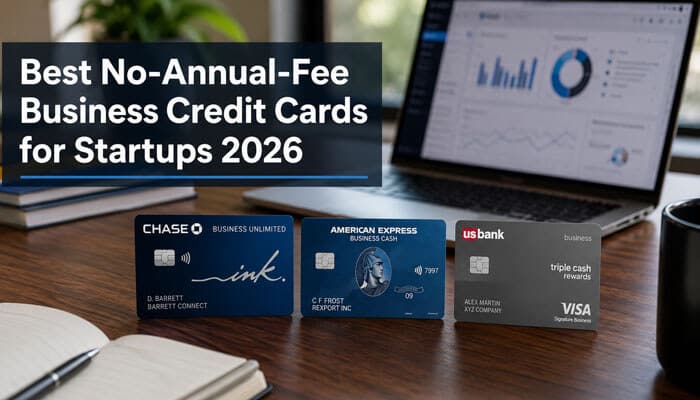
For many founders, no-annual-fee cards are the best starting point. The best business credit cards for startups 2026 in this category reduce fixed costs while still offering rewards.
| Card | Why It’s Good |
| Chase Ink Business Unlimited | Flat 1.5% cash back and intro APR |
| Amex Blue Business Cash | 2% cash back up to spending cap |
| Wells Fargo Signify Business Cash | Unlimited 2% cash rewards |
| Chase Ink Business Cash | High rewards in select business categories |
| Capital One Spark Cash Select | Simple unlimited cash back |
| U.S. Bank Triple Cash | 3% categories plus software credit |
| Bank of America Customized Cash Rewards | Flexible 3% category |
No-annual-fee cards are ideal for startups that want the best business credit cards for startups 2026 without adding another yearly cost.
Best 0% APR Business Credit Cards for Startups 2026
Many founders search for the best business credit cards for startups 2026 because they need short-term cash flow support. A 0% intro APR business credit card can help pay for planned startup expenses such as equipment, software, inventory, marketing, website development, or office setup without interest during the promotional period.
However, the best business credit cards for startups 2026 with 0% APR should be used carefully. A founder should have a repayment plan before making large purchases. Once the intro period ends, the regular variable APR can make the balance expensive.
| Card | Best For | Why It Helps |
| Chase Ink Business Unlimited | General startup purchases | 0% intro APR plus flat cash back |
| Chase Ink Business Cash | Office, phone, and internet spending | 0% intro APR plus high business categories |
| U.S. Bank Triple Cash | Software, gas, restaurants | Category rewards and software credit |
| Bank of America Customized Cash Rewards | Flexible categories | Choose a category and manage startup purchases |
SBA microloans may be better when a founder needs structured financing instead of revolving card debt. The SBA says microloans can be used for working capital, supplies, furniture, fixtures, machinery, or equipment, and have a maximum repayment term of seven years.
Best For
- Planned startup purchases
- Short-term cash flow gaps
- Equipment or software expenses
- Founders who can repay before the intro APR expires
- Businesses with predictable near-term revenue
Avoid If
- Your startup has no repayment plan
- You are using cards to cover ongoing losses
- You may carry the balance after the intro period
- You need long-term funding
- Your spending is not tied to a clear business need
Best Travel Rewards Business Credit Cards for Startups
Cash back is simple, but some startups may get more value from travel rewards. The best business credit cards for startups 2026 for travel can help founders who spend on flights, hotels, conferences, client meetings, investor trips, or remote-team travel.
| Card | Best For | Why |
| Amex Blue Business Plus | No-fee points | 2X points on eligible purchases up to yearly cap |
| Chase Ink Business Preferred | Ads, travel, shipping | 3X points in useful business categories |
| Capital One Venture X Business | Premium travel | 2X miles, travel credits, and lounge access |
| Brex | Funded startup travel spend | Corporate card tools and startup focus |
| Ramp | Controlled team spending | Virtual cards and expense management |
Chase Ink Business Preferred earns 3X points on the first $150,000 spent each account anniversary year in categories that include shipping, social media and search engine advertising, travel, internet, cable, and phone services. Capital One says Venture X Business earns unlimited 2X miles and includes a $300 annual credit for bookings made through Capital One Travel.
Travel rewards cards can be valuable, but they are not always the best business credit cards for startups 2026 for new companies. If your business does not travel often, a cash-back card may be simpler and more practical.
Best Business Credit Cards for Startups With No Personal Guarantee
No-personal-guarantee cards are popular among founders, but they are often harder to qualify for than traditional business cards. For funded teams, the best business credit cards for startups 2026 may include corporate cards such as Ramp, Brex, and BILL Divvy.
| Card | Best For | Important Note |
| Ramp Corporate Card | Spend controls and automation | Based on business financials |
| Brex Corporate Card | Funded startups | Best for scaling companies |
| BILL Divvy Card | Budgeting and expense management | Credit access depends on approval |
No-personal-guarantee cards are often best for startups with:
- Investor funding
- Strong cash balances
- Predictable revenue
- Multiple employees
- Need for expense controls
- High monthly card spending
- Accounting or finance teams
For very early-stage startups, the best business credit cards for startups 2026 may still be traditional business credit cards because those cards can be easier to access. For funded startups, corporate cards may offer better controls and less personal liability.
Traditional Business Credit Cards vs Corporate Cards for Startups
Founders often confuse traditional business credit cards with corporate charge cards. Both can be useful, but the best business credit cards for startups 2026 for a solo founder may be very different from the best card for a venture-backed company.
| Feature | Traditional Business Credit Card | Corporate Charge Card |
| Personal guarantee | Often required | Often not required |
| Personal credit check | Usually required | Sometimes not required |
| Carry balance | Usually possible | Usually must pay in full |
| Best for | Small businesses, freelancers, new founders | Funded startups and larger teams |
| Rewards | Cash back, points, travel | Rewards plus spend controls |
| Approval basis | Personal credit plus business info | Business cash flow, revenue, funding |
| Credit building | May help if reported | Varies by provider |
| Main risk | Founder may be personally liable | Must repay quickly |
Do Business Credit Cards Affect Personal Credit?
Yes, business credit cards can affect personal credit in some situations. This is why the best business credit cards for startups 2026 should be reviewed for personal guarantee language and reporting rules before applying.
| Situation | Possible Personal Credit Impact |
| Applying for a traditional business card | May trigger a personal credit check |
| Using a business card responsibly | May help business credit if reported |
| Missing payments | May damage business and personal credit |
| Signing a personal guarantee | Founder may be personally responsible |
| Using no-PG corporate cards | May reduce personal liability, depending on terms |
This is one of the most important things founders should understand before choosing from the best business credit cards for startups 2026.
Best Credit-Building Business Credit Cards for Startups 2026
The best business credit cards for startups 2026 for founders with limited credit history may be secured cards, fair-credit business cards, trade credit accounts, or corporate cards that report business activity.
| Card Type | Best Use |
| Secured business credit card | Building credit with a deposit |
| Fair-credit business card | Founders with average credit |
| Trade credit accounts | Vendor-based credit building |
| Corporate card with business reporting | Funded businesses building company credit |
Best Practices to Build Business Credit
- Register your business legally.
- Apply for an EIN if needed.
- Open a business bank account.
- Use a business address, phone number, and website.
- Apply for trade credit or a business credit card.
- Pay every bill on time.
- Keep utilization low.
- Monitor business credit reports.
- Avoid mixing personal and business expenses.
- Keep organized records of card activity.
If your main goal is credit building, the best business credit cards for startups 2026 are the cards that help you pay on time, keep utilization low, and separate business spending from personal spending.
Can Sole Proprietors Get Business Credit Cards?
Yes, sole proprietors can often apply for business credit cards, even without an LLC or corporation. Many issuers allow freelancers, consultants, creators, online sellers, gig workers, and side-business owners to apply using their legal name and Social Security number. For this group, the best business credit cards for startups 2026 are usually cards with no annual fee, simple rewards, and realistic approval requirements.
What Sole Proprietors Usually Need
- Legal name
- Business name, if different
- Social Security number or EIN
- Business address
- Estimated annual revenue
- Estimated monthly spending
- Industry type
- Personal income details
- Business start date
- Ownership percentage
Sole proprietors should be extra careful about separating personal and business spending because their business and personal finances are often closely connected.
Best Business Credit Cards for Startups 2026 by Business Type
The best business credit cards for startups 2026 by business type can look different depending on whether you are a solo founder, freelancer, e-commerce seller, agency owner, local service provider, or funded startup.
| Startup Type | Best Card Choice | Why |
| Solo founder | Chase Ink Business Unlimited | Simple rewards and no annual fee |
| Freelancer or consultant | Amex Blue Business Cash | Easy statement-credit cash back |
| Digital agency | Chase Ink Business Cash | Internet, phone, and office supply rewards |
| E-commerce startup | Capital One Spark Cash Select | Flat-rate rewards for varied expenses |
| Local service business | U.S. Bank Triple Cash | Gas, restaurants, cell phone, office supplies |
| Funded startup | Brex or Ramp | No personal guarantee and spend controls |
| Founder building credit | Bank of America Secured Business | Secured option for credit building |
| Start with team spending | Ramp or BILL Spend & Expense | Controls, virtual cards, expense automation |
| Start with travel spend | Chase Ink Business Preferred | Travel, ads, shipping, and telecom rewards |
| Start with the Bank of America relationship | BofA Customized Cash Rewards | Preferred Rewards boost potential |
How to Choose the Best Business Credit Card for Your Startup
Choosing the best business credit cards for startups 2026 depends on your business model, spending habits, revenue stage, credit profile, and funding needs.
1. Check Your Main Spending Categories
Before applying, review your expected monthly expenses.
Common startup expenses include:
- Advertising
- SaaS subscriptions
- Office supplies
- Internet and phone bills
- Business travel
- Fuel
- Restaurants
- Inventory
- Shipping
- Contractor payments
- Website hosting
- Accounting software
- Legal and compliance tools
- Cloud storage
- Design and marketing software
A flat-rate card is better if your spending is mixed. A category card is better if most of your spending falls into a bonus category. The best business credit cards for startups 2026 for mixed spending may not be the same as the best card for online ads or travel.
2. Decide Whether You Need Cash Back or Points
Cashback is simple and easy to value. Points can be more powerful for travel, but they require more planning.
Choose cashback if you want:
- Simple savings
- Statement credits
- Easy bookkeeping
- Predictable value
Choose points if you want:
- Travel redemptions
- Airline or hotel transfer partners
- Premium travel value
- Flexibility for conferences and founder trips
The best business credit cards for startups 2026 for cash back are usually easier for new founders, while points cards can make sense for travel-heavy businesses.
3. Consider Whether You Need to Carry a Balance
Some founders use intro APR offers to manage short-term startup expenses. However, carrying a balance after the promotional period can become expensive. The best business credit cards for startups 2026 should support your repayment plan, not replace it.
4. Understand Personal Guarantee Risk
Many startup business cards require a personal guarantee. This means the founder may be personally responsible if the business does not repay the debt. The best business credit cards for startups 2026 are the cards whose terms you understand before applying.
5. Look for Business Credit Reporting
If your goal is to build business credit, check whether the issuer reports payment activity to business credit bureaus. The best business credit cards for startups 2026 for credit building are cards that help create a clean payment history.6.
6. Avoid Applying for Too Many Cards
Too many applications in a short period may hurt approval odds. Start with one card that fits your startup’s real spending needs.
Business Credit Card Approval Tips for Startup Founders
Approval decisions may depend not only on credit score, but also on existing debt levels, recent credit applications, stated business revenue, cash flow stability, and overall financial risk.
To qualify for the best business credit cards for startups 2026, prepare accurate business information before applying.
- Use your legal business name.
- Have an EIN if available.
- Open a business checking account first.
- Use a business address and phone number.
- Prepare business revenue estimates honestly.
- Know your personal credit score range.
- Avoid excessive recent credit applications.
- Apply for a card that matches your credit profile.
- Keep business records organized.
- Do not overstate income or revenue.
- Review the issuer’s official terms before applying.
Even new businesses can qualify for some business credit cards, especially if the founder has good personal credit. However, stronger business revenue, lower personal debt, and clean financial records may improve approval chances.
Startup Credit Card Application Checklist
Before applying for the best business credit cards for startups 2026, prepare your business and financial information.
- Legal business name
- Business structure: sole proprietor, LLC, corporation, or partnership
- EIN or Social Security number
- Business address and phone number
- Business bank account details
- Estimated annual revenue
- Estimated monthly card spending
- Personal income
- Personal credit score range
- Industry category
- Ownership percentage
- Years in business
- Planned use of the card
- Existing business debt
- Business website, if available
This checklist helps you complete applications accurately and reduces the chance of delays.
Business Credit Card Recordkeeping and Tax Tips
The best business credit cards for startups 2026 can make bookkeeping easier, but founders still need proper records. A credit card statement alone may not always explain the business purpose of an expense. Keep receipts, invoices, statements, and notes for major purchases.
The IRS says good records can help businesses monitor progress, prepare financial statements, identify income sources, track deductible expenses, prepare tax returns, and support items reported on tax returns. The IRS also says businesses may choose any recordkeeping system that clearly shows income and expenses.
Good recordkeeping helps startups.
- Track deductible expenses
- Separate personal and business spending
- Prepare tax returns
- Support financial reports
- Review cash flow
- Apply for loans later
- Avoid confusion during audits
- Reconcile employee purchases
- Compare monthly burn rate
Best practices include saving receipts, using accounting software, tagging expenses by category, reviewing statements monthly, and avoiding personal purchases on business cards.
Common Mistakes Startups Make With Business Credit Cards
Some founders also overspend while chasing welcome bonuses or reward categories, which can reduce cash reserves and create unnecessary debt if purchases were not already part of the business budget.
Even the best business credit cards for startups 2026 can create problems if they are used carelessly.
1. Choosing a Card Only for the Bonus
A welcome bonus is useful, but it should not be the only reason to choose a card. A card with a strong bonus but weak long-term rewards may not be the best fit.
2. Ignoring the APR
Credit card interest can become expensive quickly. If your startup cannot repay the balance, consider safer funding options.
3. Mixing Personal and Business Purchases
Mixing expenses creates bookkeeping problems and may weaken financial separation for LLCs and corporations.
4. Not Checking Category Caps
Many high-reward cards have spending caps. The best business credit cards for startups 2026 for your company should match both your category spending and the card’s reward limits.
5. Ignoring Personal Guarantee Terms
Founders should understand whether they are personally responsible for the business card balance before applying.
6. Giving Employees Cards Without Controls
Employee cards can help teams move faster, but every card should have spending limits, approval workflows, and a monthly reviews.
7. Using Credit Cards as Long-Term Funding
Credit cards can help with short-term expenses, but they are risky for long-term debt. The best business credit cards for startups 2026 should support healthy cash flow, not hide weak unit economics.
Business Financing Scam Warning for Startup Founders
When comparing the best business credit cards for startups 2026, founders should avoid fake funding offers and business credit repair scams. The FTC advises small businesses to research companies before doing business and search the company name with words such as “scam” or “complaint.”
Red Flags
- Guaranteed approval with no review
- Upfront fees before funding
- Pressure to apply immediately
- No clear APR or repayment terms
- Fake “business credit repair” promises
- Claims that you must pay to improve your business credit report
- No official issuer website
- No written terms
- Requests for unusual payment methods
- Promises that sound too good to be true
Founders should apply only through official issuer websites or trusted financial institutions.
Business Credit Card vs Business Line of Credit vs SBA Microloan
A business credit card is useful for everyday purchases, but the best business credit cards for startups 2026 should not be your only funding plan.
| Option | Best For | Main Benefit | Main Risk |
| Business credit card | Daily startup expenses | Rewards and flexibility | High APR if balance is carried |
| Business line of credit | Working capital | Reusable funding | May require revenue and strong credit |
| SBA microloan | Smaller startup funding needs | Structured repayment and support | Application may take longer |
| Corporate card | Funded or high-revenue startups | Spend controls and possibly no PG | Usually must pay in full |
A startup business credit card is best for recurring expenses, rewards, and short-term spending control. A business line of credit may be better for working capital. An SBA microloan may be better when a founder needs structured financing instead of revolving debt.
Are Business Credit Cards Good for Startups?
Yes, the best business credit cards for startups 2026 can be good for startups when used responsibly. They can help manage expenses, earn rewards, build credit, and separate business purchases from personal purchases.
However, they can be risky if used to finance losses or long-term debt. Founders should use the best business credit cards for startups 2026 as cash flow and expense management tools, not as substitutes for sustainable business funding.
Good Uses
- Paying recurring subscriptions
- Buying planned equipment
- Funding short-term expenses
- Managing employee spending
- Earning rewards on normal purchases
- Building business credit
- Tracking deductible expenses
- Organizing startup purchases
Risky Uses
- Paying salaries without revenue
- Carrying large balances
- Funding untested business ideas
- Making purchases only for rewards
- Taking cash advances
- Ignoring interest rates
- Applying for too many cards at once
In many startups, credit card problems begin when founders rely on future expected revenue instead of current cash flow, which can quickly create repayment pressure if sales grow slower than expected.
Final Verdict: Best Business Credit Cards for Startups 2026
The best business credit cards for startups 2026 depend on your startup stage, spending habits, and approval profile.
For most new founders, Chase Ink Business Unlimited, American Express Blue Business Cash, and Wells Fargo Signify Business Cash are strong, simple rewards options. For category spending, Chase Ink Business Cash, U.S. Bank Triple Cash, and Bank of America Customized Cash Rewards can deliver better value. For credit building, the Bank of America Secured Business Card is useful.
For travel rewards, Chase Ink Business Preferred, Amex Blue Business Plus, and Capital One Venture X Business may fit startups with travel or advertising expenses. For funded startups that want no personal guarantee, Ramp, Brex, and BILL Divvy are stronger corporate card options.
The best approach is to choose one card that matches your actual business spending, pay on time, keep utilization low, understand the personal guarantee rules, and use the card to build better financial systems from the start. In simple terms, the best business credit cards for startups 2026 are the cards that help your startup stay organized, earn useful rewards, and avoid unnecessary debt.
Best Business Credit Cards for Startups 2026 FAQs
1. What are the best business credit cards for startups 2026?
The best business credit cards for startups 2026 include Chase Ink Business Unlimited, American Express Blue Business Cash, Wells Fargo Signify Business Cash, Chase Ink Business Cash, U.S. Bank Triple Cash, Bank of America Customized Cash Rewards, Ramp, Brex, and BILL Divvy.
2. What is the best no-annual-fee business credit card for startups?
The best business credit cards for startups 2026 with no annual fee may include Chase Ink Business Unlimited, Amex Blue Business Cash, Wells Fargo Signify Business Cash, Capital One Spark Cash Select, U.S. Bank Triple Cash, and Chase Ink Business Cash.
3. What is the best business credit card for startups with no credit?
The best business credit cards for startups 2026 for founders with limited credit may include secured business credit cards or credit-building business cards. A secured card can be a practical first step before applying for stronger unsecured options.
4. What is the safest way to use a startup business credit card?
The safest way to use the best business credit cards for startups 2026 is to use the card for planned business expenses, pay on time, keep utilization low, avoid cash advances, save receipts, and review statements every month.
5. What is the best business credit card for startups with employees?
The best business credit cards for startups 2026 for startups with employees may include cards that offer employee cards, spending limits, virtual cards, and expense management tools. Ramp, Brex, BILL Spend & Expense, Chase Ink cards, and Amex business cards may fit depending on the startup’s stage and approval profile.
6. Is a 0% APR business credit card good for a startup?
A 0% APR business credit card can be useful for planned short-term expenses, but only if the founder can repay the balance before the promotional period ends. The best business credit cards for startups 2026 with 0% APR should not be used as long-term startup funding.
7. How should founders compare the best business credit cards for startups 2026?
Founders should compare the best business credit cards for startups 2026 by annual fee, rewards, intro APR, business credit reporting, personal guarantee terms, employee controls, approval requirements, and real monthly spending categories.

